
By Shujauddin Qureshi
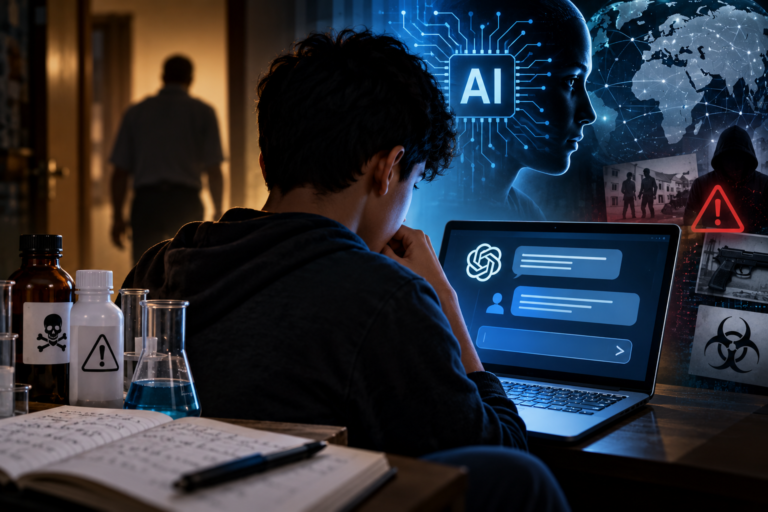
AI Harm Gap -A teenager in Bahawalpur allegedly turned to artificial intelligence for help in a plan to poison his own father. The case is disturbing not simply because of the alleged crime, but because of the role that a technology designed to answer questions and assist people may have played in it.
According to a report published by daily Dawn, the National Cyber Crime Investigation Agency arrested a 17-year-old student from Bahawalpur after he allegedly attempted to poison his father. Investigators said the teenager had developed an interest in chemistry after watching the American crime drama “Breaking Bad” and had reportedly set up a small laboratory at home.
The teenager allegedly prepared a substance with the intention of poisoning his father. After the first attempt failed, investigators said, he sought further guidance from an artificial intelligence system about how to carry out the act without being detected. The authorities reportedly received information through an automated system and subsequently arrested him. The investigation is continuing.
The details of the case are shocking. But perhaps the most important question is not what the teenager searched for. It is why an increasingly powerful technology can sometimes become available to someone who wants to cause harm.
Artificial intelligence does not have a human conscience. It does not understand family relationships, grief, anger or the consequences of a violent act in the way another human being does. It can recognise patterns, process information and produce remarkably convincing answers. That is precisely what makes its misuse so worrying.
For years, the internet has given people access to information that was once difficult to obtain. Artificial intelligence has changed the nature of that access. Instead of searching through dozens of websites, a person can now ask a conversational system a question and receive an immediate response.
That convenience is one of AI’s greatest strengths. It can also become one of its greatest weaknesses.
Imagine a young person sitting alone in a bedroom, angry with a parent, frightened about the future or fascinated by violence. In the past, that person might have needed to search through books, websites and online forums. Today, the technology can potentially become a conversational companion that answers questions in seconds.
AI Harm Gap: That is where the real danger begins.
The Bahawalpur case should therefore not be treated simply as another crime story. It should also be seen as a warning about the growing gap between the speed at which artificial intelligence is developing and the speed at which society is learning how to control its misuse.
This problem is not limited to Pakistan.
Around the world, concerns about dangerous uses of AI are increasing. In September 2026, Reuters reported that Anthropic had disrupted attempts to misuse its AI systems in areas including biological weapons research, conventional weapons development and cyber operations. The company said some actors had attempted to use AI for activities that could support dangerous scientific and military programmes.
The significance of such reports is not that AI has suddenly become responsible for every dangerous act committed by humans. It has not. The bigger concern is that AI can potentially reduce the amount of expertise, time and effort required to pursue certain harmful activities. That is a profound change.
Another case has raised even bigger questions about responsibility. Reuters reported this month that the government of British Columbia filed a lawsuit against OpenAI following the February 2026 school shooting in Tumbler Ridge, in which nine people were killed. The lawsuit alleges that the shooter had discussed gun violence with ChatGPT and that the company failed to adequately respond to warning signs. OpenAI has disputed the allegations and says it has systems designed to prevent its models from meaningfully enabling violence.
Whatever the final legal findings in that case, it illustrates a question that governments around the world will increasingly have to answer:
- When an AI system is misused to cause real-world harm, who is responsible?
- Is it the person using the technology?
- Is it the company that developed the system?
- Is it the government that failed to regulate it?
- Or is responsibility shared among all three?
There is no simple answer.
AI Harm Gap: Youth Deserve Attention
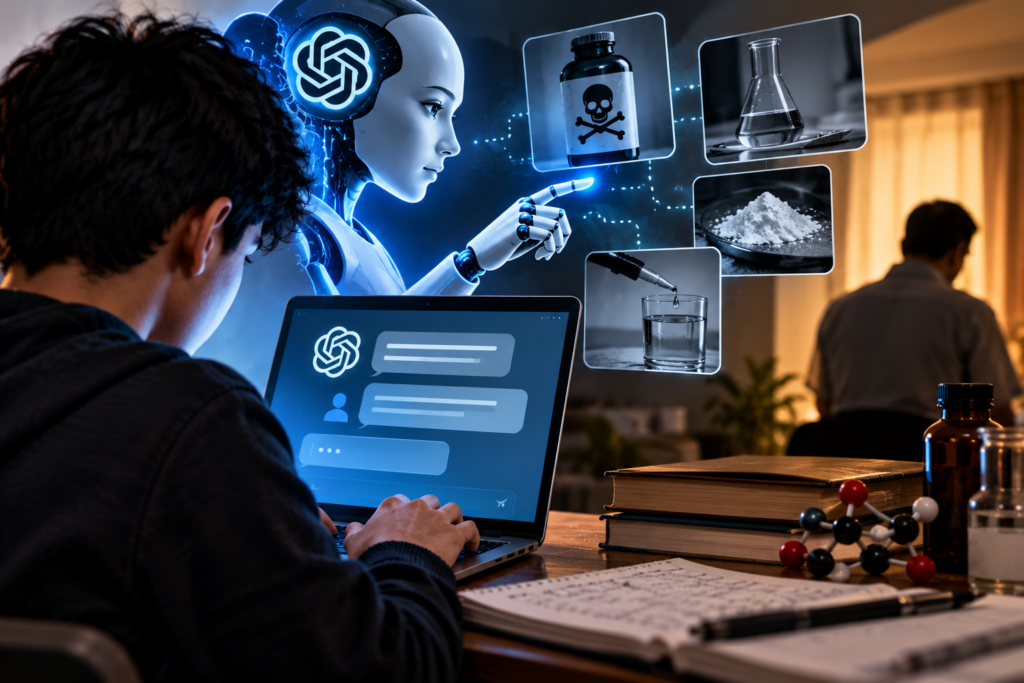
There is another dimension that deserves attention: children and teenagers.
Young people are among the fastest adopters of new technology. They are also still developing the ability to assess risk, understand consequences and control impulses. Giving teenagers access to powerful conversational systems without adequate parental guidance, digital education and safety mechanisms creates a new challenge for families.
Parents cannot simply say, “Don’t use the internet.” That world no longer exists.
Children use phones for education, entertainment, communication and increasingly for learning. AI is becoming part of that environment. The answer therefore cannot be to keep young people completely away from technology. The answer has to be teaching them how to use it responsibly and ensuring that dangerous requests are properly identified and blocked.
The Bahawalpur incident also raises questions for Pakistan. Artificial intelligence is spreading rapidly in the country. Students use it for assignments. Journalists use it for research and translation. Businesses use it for customer service. Programmers use it to write and check code. Doctors, lawyers, teachers and researchers are also experimenting with AI tools.
But public discussion has largely focused on productivity. We talk about how AI can help students learn, businesses grow and government services improve.
We talk much less about what happens when the same technology is deliberately misused. Pakistan therefore needs a serious national conversation about AI safety. Regulation should not simply focus on restricting technology. It should establish clear responsibilities for technology companies, schools, parents and users.
There should also be greater awareness about the difference between information and wisdom.
AI can provide information. It cannot replace human judgement.
A machine may be able to explain something convincingly, but that does not make the information safe, ethical or appropriate. A person who asks an AI system how to do something dangerous should not receive a step-by-step answer simply because the question has been written in clever language.
Technology companies have a responsibility to build stronger safeguards. Governments have a responsibility to establish sensible rules. Parents and schools have a responsibility to teach children about digital risks.
But individuals also have responsibility. The most important lesson from the Bahawalpur case may therefore be a simple one: technology does not remove human responsibility.
AI can write an essay, translate a language, analyse information and help discover new medicines. It can also be manipulated by people pursuing destructive goals.
The technology itself is neither a hero nor a villain. The danger lies in what humans ask it to do, what systems allow it to do and how quickly society responds when something goes wrong.
The Bahawalpur teenager’s alleged actions should make us pause before celebrating every new development in artificial intelligence.
The question should not only be, “What can AI do?” We must also ask, “What should AI never be allowed to do?”
That is the beginning of an important conversation about the AI Harm Gap, the space between what artificial intelligence is capable of doing and what society is prepared to safely control.
If that gap continues to grow, the problem will not be artificial intelligence alone. It will be our failure to understand how quickly the world around us is changing.